
Loose or Shifting Teeth in Adults: When It's a Sign of Gum Disease, Not Normal Aging (Gurgaon)
Loose or Shifting Teeth in Adults: When It’s a Sign of Gum Disease, Not Normal Aging (Gurgaon)
An adult tooth that moves is not a normal part of getting older. Teeth are not supposed to loosen with age the way hair greys or eyesight changes — a permanent tooth stays firm for life unless something has damaged what holds it in place. If a tooth has started to feel loose, or your teeth have drifted so that your bite no longer meets the way it used to, that is a finding worth having examined rather than accepted. N Square Dental Care Clinic in Sector 65, Gurugram, sees this presentation regularly, and the single most common cause is advanced gum disease.
Why do adult teeth become loose?
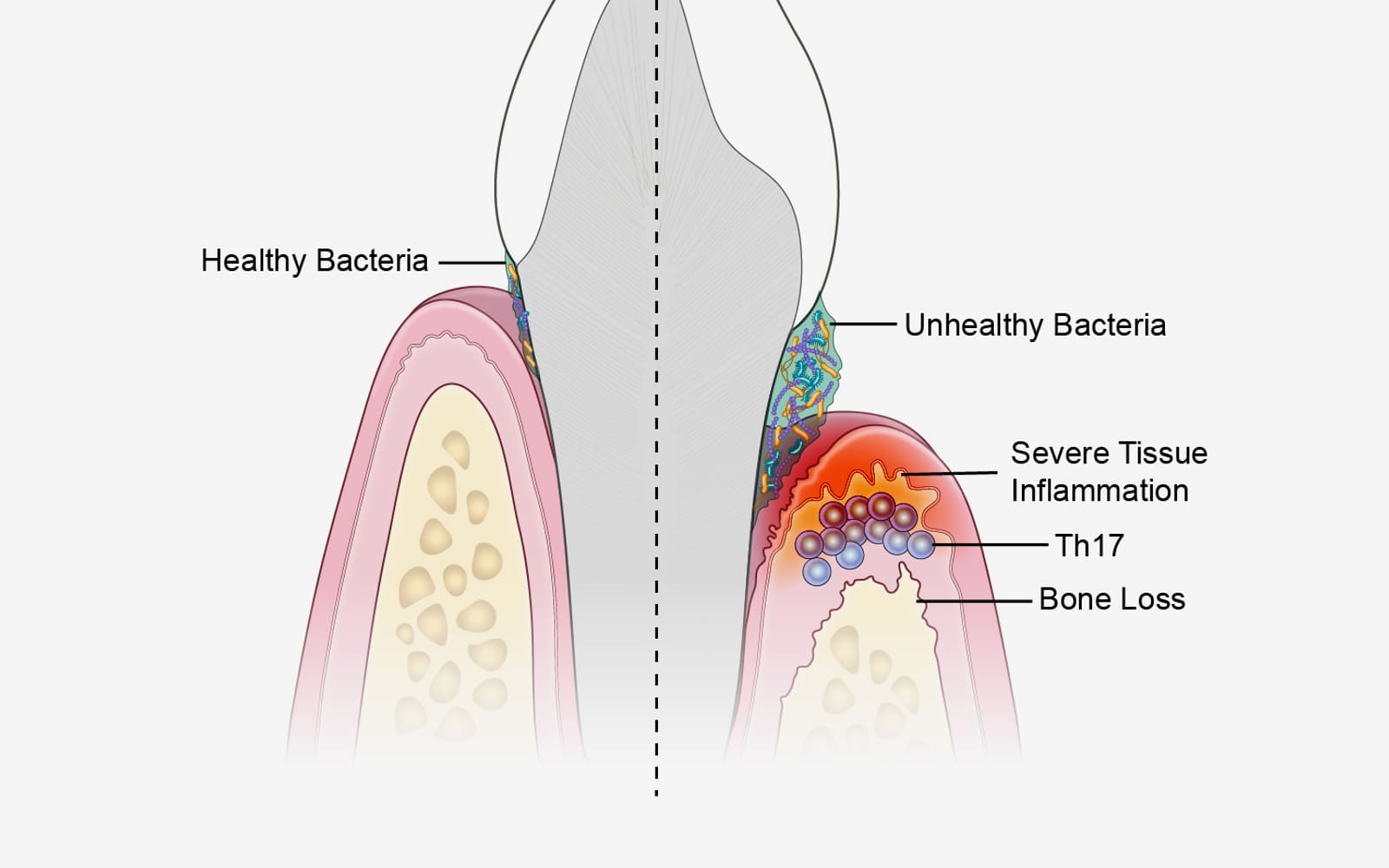
A tooth is held in the jaw by bone and by the periodontal ligament attaching the root to that bone. Loosening means that support has been reduced. In most adult cases, the reason is periodontitis — gum disease that has progressed past the gums themselves and started destroying the underlying bone.
The reason this comes as a surprise to so many people is that the destructive stage is often painless. Bleeding when brushing is the early warning, and it’s easy to dismiss. By the time a tooth is actually mobile, the disease has usually been active for years.
A useful marker: the healthy space between gum and tooth measures roughly 1 to 3 millimetres when a dentist probes it. Readings consistently deeper than 4 to 5 millimetres indicate that attachment has been lost. That measurement is a routine part of a gum examination and is how the extent of the problem gets established rather than guessed at.
Is it normal for teeth to shift as you get older?
Some minor crowding of the lower front teeth over decades is common enough that people assume all movement is age. But there is a difference between teeth that have gradually crowded and teeth that are visibly drifting, splaying outward, developing new gaps, or feeling loose to the tongue or finger. The second group is not an ageing pattern — it’s a sign that support has changed.
A bite that has started to feel different is worth mentioning at an examination even without pain, because a changing bite is often the first thing a patient notices when bone support is being lost.
What causes tooth mobility besides gum disease?
Gum disease is the most frequent cause, but not the only one, and assuming it is can mean missing the real problem:
- Injury or trauma. A blow to the mouth can loosen a tooth immediately or leave it mobile weeks later.
- Clenching and grinding. Sustained excessive force can contribute to mobility, particularly where support is already compromised.
- A failing large restoration. A cracked tooth or a failing crown or filling can create movement that feels like a loose tooth.
- Drifting after a missing tooth. When a tooth is lost and not replaced, neighbouring teeth can tilt or migrate into the space and opposing teeth can over-erupt, changing the bite over time.
- Pregnancy-related gum changes. Hormonal changes can increase gum inflammation, which can affect how teeth feel, and warrants a dental check rather than self-diagnosis.
These are distinguishable on examination — which is the argument for having it looked at rather than working out the cause yourself.
Can a loose adult tooth be saved?
Sometimes, and it depends almost entirely on how much bone support remains. That is not evasiveness — it is the actual clinical variable, and it cannot be judged by looking at the tooth from outside. It requires an examination and X-rays.
Broadly: a tooth loosened by inflammation where the bone is still largely intact has a considerably better outlook than one where substantial bone has already been destroyed. Early assessment genuinely changes the range of options available, which is the practical reason not to wait and watch.
No honest dentist will promise in advance that a specific loose tooth can be saved. What can be promised is a clear answer after an examination about what is realistic.
What does treatment involve?
Assessment comes first: checking mobility, measuring gum pockets, taking X-rays to see bone levels, and reviewing your medical history — conditions such as diabetes have a well-established two-way relationship with gum disease and affect how treatment is planned.
Where gum disease is the cause, the foundation of treatment is thorough professional cleaning below the gumline — scaling and root planing — to remove the deposits driving the inflammation, followed by a review to see how the tissues respond. Managing contributing factors matters too: smoking, uncontrolled diabetes, and inadequate home cleaning all work against the result. These are all within the scope of care at N Square Dental Care Clinic.
Some advanced cases need periodontal surgery, bone grafting, or regenerative procedures. These are specialist periodontal procedures and are not offered at N Square Dental Care Clinic — if your case calls for one, that is a referral conversation, and being told so directly is more useful than being treated indefinitely without it.
What if the tooth can’t be saved?
If a tooth is beyond saving, the question becomes how to replace it and how to protect the teeth around it. Dr Megha Kaul’s documented scope covers restorative and prosthetic work — crowns, bridges, and dentures — and planning a replacement is part of the same conversation as the extraction, not a separate afterthought. Dental implants are another replacement route that patients often ask about; they are a distinct treatment path and not a service provided at this clinic.
Replacing a missing tooth is not only cosmetic. Leaving a gap is what allows the drifting and over-eruption described earlier, which is how one lost tooth becomes a wider bite problem.
Frequently asked questions
Is it normal for teeth to get loose with age? No. Adult teeth should stay firm for life. Loosening indicates lost support — most often from gum disease — and should be examined rather than accepted as ageing.
Can a loose tooth tighten up again? Where mobility is driven by inflammation and the bone is largely intact, teeth can become firmer after the inflammation is treated. Where bone has already been destroyed, that loss does not reverse on its own, though the condition can often be stabilised.
My teeth are shifting but nothing hurts. Should I still see a dentist? Yes. Periodontitis is frequently painless in its destructive stages, and a changing bite is often the first thing patients notice. Absence of pain is not evidence that nothing is wrong.
Will the tooth have to be removed? Not necessarily. That depends on remaining bone support, which requires an examination and X-rays to determine. Extraction is one possible outcome, not an automatic one.
Does gum disease affect the rest of my health? Gum disease has well-documented associations with several systemic conditions, diabetes being the most established, where the relationship runs in both directions. Your dentist will want to know about your medical history for this reason.
How quickly should I get a loose tooth checked? Promptly. Not as an overnight emergency, but this is not something to leave for months — how much support remains is the factor that determines your options, and it doesn’t improve while you wait.
Dr Megha Kaul is one of the most respected dentists in Gurgaon, and with 18 years in general and family dentistry she has seen the full range of what a loose tooth turns out to be — from an easily treated inflammatory problem to one needing a planned replacement. If a tooth has started to move, N Square Dental Care Clinic can examine it and tell you plainly where you stand.
Where to find N Square Dental Care Clinic
Address: Shop No. 42, First Floor, Plaza, EMAAR Emerald Estate, Sector 65, Gurugram, Haryana 122101.
The clinic sits inside the EMAAR Emerald Estate plaza, on the Sector 65 stretch of Golf Course Extension Road (SPR) — one of Gurgaon’s main north-south corridors. Below are general routes from a few well-known parts of the city. Road conditions and one-ways in Gurgaon change often, so treat this as a starting orientation and confirm the live route on Google Maps or a similar app before driving — search “EMAAR Emerald Estate, Sector 65, Gurugram” or the clinic’s Google Business listing.
- From DLF Cyber City / Golf Course Road area: Head south on Golf Course Road, then continue onto Golf Course Extension Road (SPR) as it runs through Sectors 56-61 toward Sector 65. EMAAR Emerald Estate is on this same road.
- From NH-8 / IFFCO Chowk / Delhi border: From NH-8, come via Sohna Road, then turn onto Golf Course Extension Road (SPR) toward Sector 65 — the clinic is inside the EMAAR Emerald Estate plaza on this stretch.
- From Sohna Road: Golf Course Extension Road (SPR) connects directly off Sohna Road; follow it toward Sector 65/Sector 61 to reach EMAAR Emerald Estate.
- From the Gurgaon-Faridabad Road / Faridabad side: Golf Course Extension Road connects through to the Gurgaon-Faridabad corridor, giving a direct approach into Sector 65 from the south-east.
- By metro: The nearest metro connectivity is around the Rapid Metro stations near Sector 55-56, from where it’s a short drive along Golf Course Extension Road to Sector 65.
About the author: Dr Megha Kaul has practiced dentistry since 2008 and is the Owner, Founder & Dentist-in-Charge of N Square Dental Care Clinic, Sector 65, Gurugram.
Ready to book a consultation?